Cytokine production by macrophages and dendritic cells
David M. Mosser, Ph.D.
Department of Cell Biology and Molecular Genetics
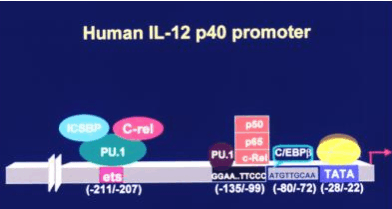
Figure 1. Diagramatic representation of the IL-12 promoter. This cytokine has been described as bridging innate and adaptive immunity, and the promoter certainly is a reflection of this, because transcription requires the binding of (innate) NF-κB family members to the -135 element as well as interferon regulatory factor (adaptive) binding to the ets site at -211. The ligation of Fcγ receptors on macrophages prevents the binding of the PU.1-containing transcription complex to the ets element, thereby preventing the synthesis of IL-12. For details, see Cappiello, M.G., Sutterwala, F.S., Trinchieri, G., Mosser, D.M. and Ma, X. 2001. Suppression of IL-12 transcription following Fcγ receptor ligation. Journal of Immunology 166:4498-4506.
Figure 2 (below). The induction of IL-12 (red) by cells transfected with human CD40L (stained green). In this assay, fibroblastoid cells were transfected with human CD40L and a modified gene encoding the major surface protein on Leishmania, called gp63. These transfected cells bound specifically to macrophages and induced them to produce high levels of IL-12. These cells were also effective at vaccinating mice against virulent Leishmania spp. In the picture below, the transfected L-929 cells were stained green with CM-FDA. The macrophages were stained with a PE-conjugated antibody to detect intracellular IL-12 production. For details, see Chen, G., Darrah, P.A., and Mosser, D.M. 2001. Vaccination against the intracellular pathogen, Leishmania spp by directing CD40 Ligand to macrophages. Infection and Immunity 69:3255-63.
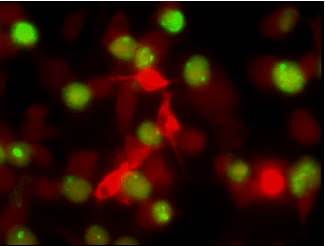
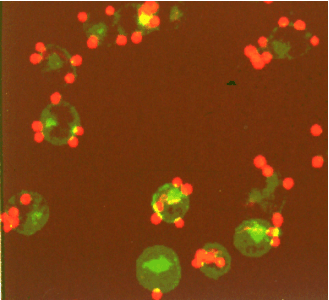
Figure 3 (below). Confocal micrograph showing the rosetting of opsonized sheep erythrocytes (red) around macrophages (green). When these erythrocytes are opsonized with IgG they ligate the macrophage Fcγ receptors, and this ligation causes a profound alteration in cytokine production. IL-12 production is turned off and IL-10 is dramatically induced. Thus the ligation of this single receptor class, the FcγR, changes the phenotype of these macrophages to a population of cells that is strongly antiinflammatory. For details, see:Gerber, J.S. and Mosser, D.M. 2001. Reversing lipopolysdaccharide toxicity by ligating the macrophage Fcγ receptors. J. Immunology 166:6861-68.