
Children living with Hutchinson–Gilford Progeria Syndrome

HGPS Research · University of Maryland

Studying Aging
At Its Source

The Cao Lab investigates Hutchinson–Gilford Progeria Syndrome and what it reveals about the biology of aging every one of us shares.

Explore the Research

Illustration of a DNA strand highlighting a single point mutation

The Central Question

One Gene.
Two Timelines.

A single mutation in the LMNA gene compresses a lifetime of cellular aging into childhood — a rare, sharpened lens on a process every one of us goes through.

See How It Works

Illustration of stem cells dividing inside a petri dish

From Bench To Understanding

Modeling Disease
In A Dish

Patient-derived stem cells let us watch HGPS unfold outside the body — and test what reverses it.

Meet the Team

Dr. Kan Cao, Principal Investigator

Welcome!

Understanding a rare disease to understand us all.

Hutchinson–Gilford Progeria Syndrome compresses many hallmarks of aging into childhood. By studying how that happens at the molecular level, we're building a sharper picture of the aging process everyone eventually experiences.

How We're Studying It

Four connected threads of research, each looking at the same question from a different angle.

Genomics

Mapping how progerin reshapes chromatin.

More

Stem Cell Biology

Modeling HGPS with patient-derived iPSCs.

More

Normal Aging

Testing the link to typical, gradual aging.

More

Publications

Our published findings and preprints.

More
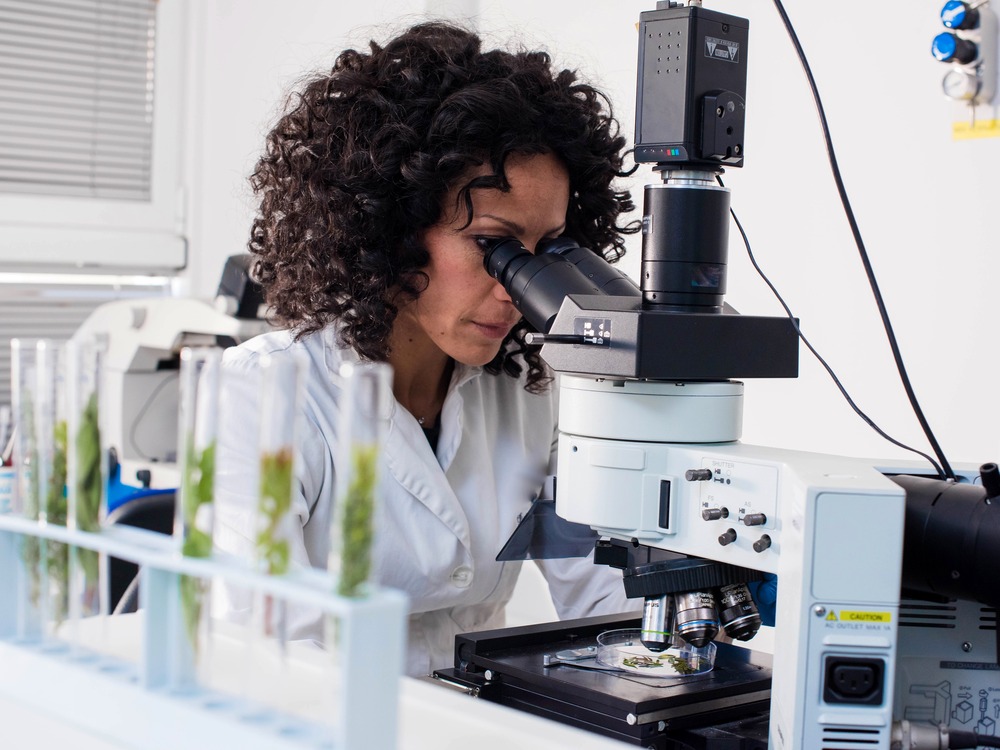
Researcher examining a sample under a microscope

One Gene. Two Timelines.

HGPS arises from a single mutation in the LMNA gene, producing a toxic protein fragment called progerin. In children who carry it, many hallmarks of old age appear within a matter of years — giving us a rare, sharpened window into the much slower process every one of us goes through.

Meet the Team

Sharing the Knowledge

Building Insights

Identifying which genomic regions shift under progerin's influence, and how those changes ripple outward.

Breaking Boundaries

Reprogramming patient cells into iPSCs to watch the disease unfold outside the body, in real time.

Implementing Ideas

Testing whether the same mechanisms drive normal aging, just slower and quieter.

University of Maryland CBMG NIH NHGRI