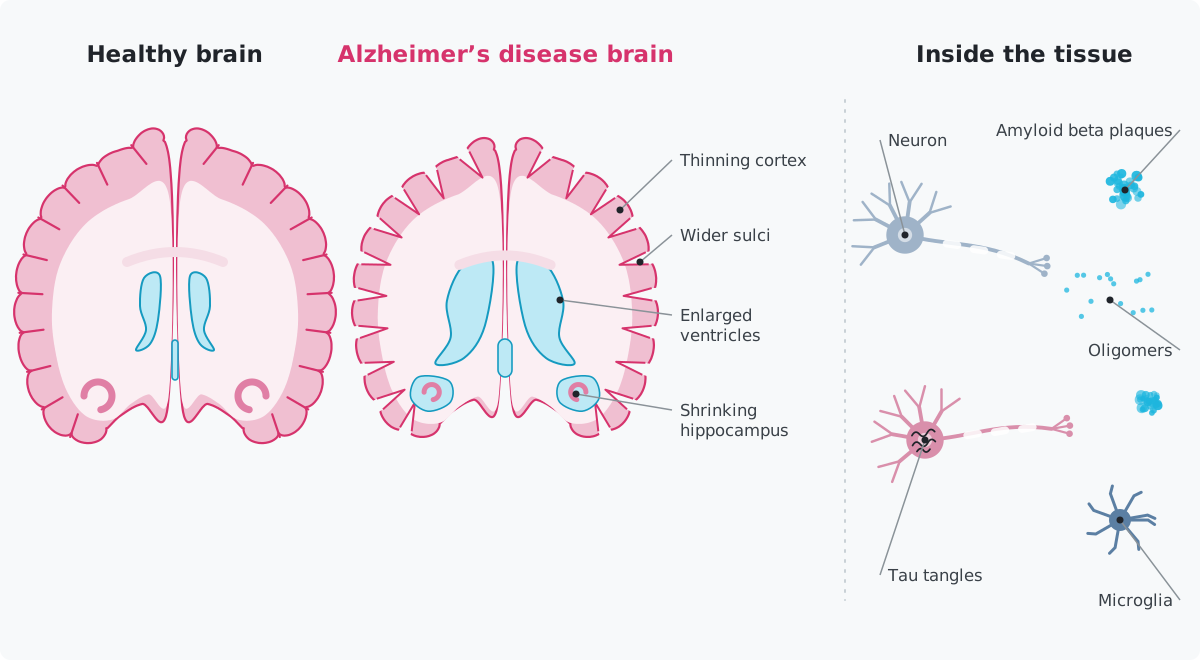
Alzheimer’s disease (AD) is one of the most challenging neurodegenerative disorders of our time. Despite decades of intensive research and substantial investment, effective treatments remain limited. Although recent therapies targeting amyloid-beta have demonstrated that disease progression can be modestly slowed in selected patients, we still lack a comprehensive understanding of why Alzheimer’s disease develops, why some individuals are more vulnerable than others, and how to prevent it.
One fundamental fact deserves greater attention: aging is the strongest risk factor for Alzheimer’s disease.
Most Alzheimer’s cases occur after age 65, and disease prevalence rises dramatically with advancing age. Yet many experimental models of Alzheimer’s disease focus primarily on disease-associated mutations, amyloid accumulation, or tau pathology, without adequately incorporating the biological processes of human aging.
This raises an important question: Can we truly understand an age-associated disease using cells that are biologically young?
The Missing Dimension in Alzheimer’s Disease Models
One of the most exciting advances in biomedical research has been the development of induced pluripotent stem cell (iPSC) technology. Scientists can now reprogram adult human cells into stem cells and differentiate them into neurons, astrocytes, and other brain cell types. These models offer unprecedented opportunities to study Alzheimer’s disease in human cells carrying relevant genetic backgrounds.
However, there is an important limitation.
During cellular reprogramming, many age-associated molecular features are reset. As a result, neurons derived from iPSCs often resemble developmentally immature cells rather than neurons that have experienced decades of biological aging.
This creates a fundamental mismatch: Alzheimer’s disease typically develops in aging brains, but many laboratory models use relatively young neurons.
Although these models can reproduce important disease features, including amyloid-beta production and certain tau abnormalities, they may fail to capture the full biological environment in which late-onset Alzheimer’s disease develops.
This limitation may help explain why some promising discoveries in experimental systems have not translated into equally successful clinical treatments.
Aging Is More Than the Passage of Time
Aging is not simply a matter of how many years a person has lived. It involves progressive changes in cellular and molecular processes that influence tissue function and resilience.
Several hallmarks of biological aging are particularly relevant to Alzheimer’s disease:
- Mitochondrial dysfunction: Declining energy metabolism can compromise neuronal activity and increase vulnerability to stress.
- Cellular senescence and chronic inflammation: Aging cells and altered immune responses may contribute to persistent neuroinflammation.
- Loss of proteostasis: Impaired protein quality-control systems can promote the accumulation of abnormal proteins, including amyloid-beta and tau.
- Epigenetic and RNA-processing changes: Alterations in gene regulation and alternative splicing may disrupt neuronal maintenance and function.
- Genomic instability and nuclear dysfunction: Accumulating cellular damage may interfere with long-term neuronal survival.
- Reduced cellular resilience: Aging cells may become less capable of adapting to metabolic, oxidative, and inflammatory challenges.
These processes do not operate independently. They interact and may amplify the effects of Alzheimer’s-associated genetic and pathological changes.
For example, a biologically resilient neuron may tolerate amyloid-beta accumulation better than an aged neuron already experiencing mitochondrial dysfunction, impaired protein clearance, and chronic cellular stress.
Thus, aging may not simply accompany Alzheimer’s pathology. It may create the biological conditions that allow pathology to become progressively more damaging.
Bringing Biological Aging Into Human Alzheimer’s Models
Our laboratory has spent many years investigating the molecular mechanisms of human aging, particularly the role of nuclear architecture, progerin, mitochondrial function, and cellular stress responses.
Progerin is an abnormal form of lamin A associated with Hutchinson-Gilford progeria syndrome, a rare premature-aging disorder. Research has also detected low levels of progerin in certain tissues during normal human aging, although its abundance and biological significance vary by tissue and cell type.
Building on this background, we have explored whether controlled expression of progerin can introduce selected aging-associated features into human iPSC-derived brain cells.
By combining Alzheimer’s-associated genetic alterations with progerin-mediated cellular stress, we have developed an experimental approach to model interactions between disease pathology and aging-related cellular changes.
Our accelerated Alzheimer’s disease models have shown promising disease-relevant phenotypes, including altered amyloid-beta profiles, increased tau phosphorylation, inflammatory responses, and changes in neuronal activity.
Importantly, these findings do not mean that progerin reproduces every aspect of normal brain aging. Rather, it provides an experimental tool for investigating how specific aging-associated cellular mechanisms may influence Alzheimer’s pathology.
This distinction is essential. No single model can fully recreate decades of human brain aging, but carefully designed models can help us identify which aging mechanisms contribute most strongly to disease vulnerability.
From Studying Disease Pathology to Understanding Cellular Vulnerability
Traditional Alzheimer’s research has understandably emphasized two defining pathological features: amyloid-beta plaques and neurofibrillary tangles composed of abnormal tau.
These remain central to understanding the disease. However, the presence of pathological proteins does not always correspond directly to the severity of cognitive impairment. Some older individuals accumulate substantial amyloid pathology while maintaining relatively preserved cognitive function.
Why?
One possibility is that individuals differ in their biological capacity to tolerate pathological stress.
This concept brings cellular resilience into the center of Alzheimer’s research. Aging biology provides tools to investigate why certain neurons or individuals are more vulnerable than others, including differences in mitochondrial reserve, oxidative stress responses, protein homeostasis, inflammatory signaling, and cellular repair mechanisms.
Rather than asking only how much amyloid or tau is present, we can also ask:
What determines whether a neuron can withstand these pathological challenges and continue functioning? This shift in perspective may help uncover therapeutic strategies that complement approaches directed at amyloid and tau.
Why Collaboration Between Aging and Neuroscience Researchers Matters
Alzheimer’s disease is too complex to be understood through any single discipline.
Neuroscientists contribute essential expertise in neuronal circuits, synaptic function, cognition, and brain pathology. Geneticists identify inherited and acquired factors that influence disease risk. Clinicians provide insight into disease progression and patient variability.
Researchers specializing in human aging bring an additional, complementary perspective: an understanding of how cellular systems change over time and how these changes influence susceptibility to disease.
Integrating these fields could improve Alzheimer’s research in several ways, from developing more biologically relevant human cell models to identifying aging-associated biomarkers, understanding individual differences in disease progression, and discovering therapeutic targets that strengthen cellular resilience.
The goal is not to replace conventional Alzheimer’s disease models, but to expand them.
A more comprehensive experimental strategy should consider both the genetic drivers of Alzheimer’s pathology and the aging-related cellular environment in which those drivers operate.
Alzheimer’s disease is not simply a disease that happens to occur in older people. It is a disease whose development and progression are profoundly influenced by the biology of aging.
To better understand Alzheimer’s disease, we must better understand human aging. And to develop the next generation of Alzheimer’s models and therapies, aging biology and neuroscience must advance together.
This article is for general educational purposes and is not medical advice. Please talk with a qualified healthcare provider about any treatment decisions.

Dr. Cao is an aging scientist, inventor, and professor in the Department of Cell Biology & Molecular Genetics at the University of Maryland. Meet the team