Retinol has been one of the most widely recognized ingredients in skincare for decades. Its popularity is supported by a substantial body of research on retinoids, particularly their ability to influence epidermal renewal and collagen-related processes.
But our understanding of skin aging has evolved considerably.
Today, scientists recognize that changes in mitochondrial function, oxidative stress, cellular senescence, and tissue repair also play important roles in how skin ages.
This raises an interesting question: Could targeting cellular metabolism provide a complementary approach to conventional retinoid-based strategies?
How retinoids work
Retinol belongs to the vitamin A family. In the skin, it can be converted through metabolic steps into retinoic acid, which regulates gene expression through nuclear retinoid receptors.
Retinoids influence epidermal differentiation, cell turnover, and pathways involved in collagen metabolism.
Clinical research, particularly on prescription tretinoin, has demonstrated improvements in certain signs of photoaging, including fine wrinkles and uneven pigmentation.
However, retinoids can also cause irritation, dryness, and peeling, especially during extended use. Their effects and tolerability vary by compound, concentration, formulation, and individual skin characteristics.
Skin aging begins at the cellular level
Skin aging is often described in terms of visible changes: wrinkles, thinning, pigmentation, and loss of elasticity.
But these visible changes reflect biological processes occurring much deeper within the tissue.
Fibroblasts in the dermis produce and maintain collagen and other components of the extracellular matrix. With age, their function may decline, while oxidative stress, senescence-associated changes, and altered cellular signaling can affect the skin's ability to maintain its structure.
Mitochondria are central to these processes.
They generate energy needed for cellular maintenance and help regulate the redox environment that influences how cells respond to stress.
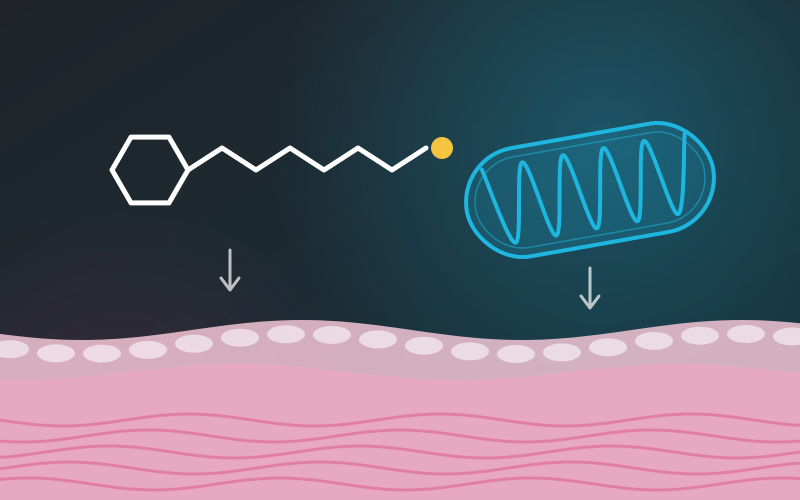
A different scientific approach: methylene blue
My laboratory became interested in methylene blue because of its unusual redox properties and its potential to influence mitochondrial function.
In experimental studies involving human skin cells, we found that methylene blue could improve certain measures of mitochondrial activity and reduce some indicators associated with oxidative stress and cellular aging.
We also investigated how these changes relate to the function and longevity of dermal fibroblasts and maintenance of the extracellular matrix.
These findings point toward a potentially different way of thinking about skin aging: rather than focusing exclusively on surface renewal or a particular signaling pathway, we can also investigate the metabolic health and longevity of the cells responsible for maintaining skin tissue.
Is methylene blue a replacement for retinol?
Not based on current clinical evidence.
Retinoids and methylene blue act through different biological mechanisms, and the strength of evidence supporting their use for skin aging is not equivalent.
Retinoids have extensive clinical research supporting specific dermatological applications. Methylene blue has intriguing laboratory evidence, but fewer rigorous human clinical studies.
Why the distinction matters
In aging research, we increasingly recognize that improving cellular function may require targeting multiple interconnected pathways.
Cellular metabolism, gene regulation, oxidative stress, and extracellular matrix maintenance are not independent processes. They continuously influence one another.
The comparison between retinoids and methylene blue illustrates how scientific approaches evolve as our understanding of biology expands. While retinoids promote epidermal cell turnover and renewal, methylene blue may offer a complementary approach by supporting mitochondrial function, reducing oxidative stress, and promoting cellular health. Together, these distinct mechanisms could potentially support skin rejuvenation at multiple biological levels, although further research is needed to establish their combined benefits.
Established treatments often focus on well-characterized pathways, while emerging research identifies additional cellular mechanisms that may eventually offer complementary strategies.
Looking ahead
One of the most exciting developments in skin biology is the shift from studying visible signs of aging to understanding the underlying cellular processes.
The ultimate objective is not simply to make skin look younger, but to understand how skin cells maintain their function, respond to environmental stress, and preserve tissue integrity throughout life.
Methylene blue is one of several research tools helping us explore these questions.
This article is for general educational purposes and is not medical advice. Please talk with a qualified healthcare provider about any treatment decisions.

Dr. Cao is an aging scientist, inventor, and professor in the Department of Cell Biology & Molecular Genetics at the University of Maryland. Meet the team