Discussions surrounding weight reduction typically focus on metabolic health, cardiovascular function, and altered body composition. However, an equally significant area of ongoing study involves how these systemic shifts influence tissue architecture, particularly within the skin.
When individuals undergo rapid or substantial weight loss, they frequently report secondary structural shifts, such as reduced facial volume, heightened cutaneous laxity, or more pronounced fine lines and wrinkles. Corresponding structural changes often appear in other anatomical regions as well.
Understanding the biological drivers of these changes requires examining the mechanisms that govern cellular aging and tissue maintenance.
Skin is more than a surface covering
Skin is not merely a passive outer envelope, but a highly dynamic biological organ structured in distinct, interacting functional layers.
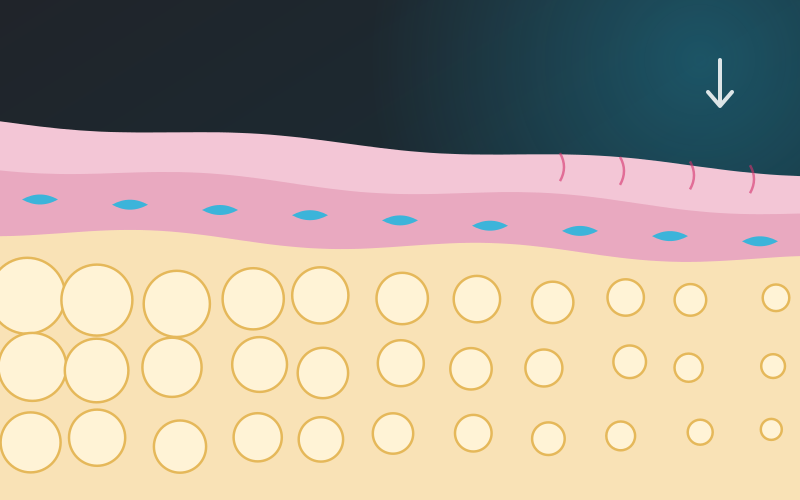
The outer epidermal layer forms an essential protective barrier, while the underlying dermis houses collagen fibers, elastin, active fibroblasts, and microvascular networks that collectively sustain structural integrity and mechanical resilience. Deep to the dermis, subcutaneous adipose tissue provides essential volumetric contouring, mechanical cushioning, and structural baseline support.
These specialized tissue compartments work together to preserve overall cutaneous architecture.
Consequently, significant shifts in total body mass directly alter the underlying volumetric support and mechanical tension exerted on these integumentary layers.
Why rapid weight loss can change facial appearance
A primary mechanism driving these visible changes is the rapid depletion of subcutaneous fat. Distinct facial fat compartments contribute to facial contours and youthful fullness. As subcutaneous fat diminishes, the overlying skin loses structural support, making anatomical folds, fine lines, and facial hollowing more pronounced.
Beyond these structural changes, alterations in lipid metabolism may also influence skin health. Ceramides are essential components of the epidermal lipid barrier, helping maintain skin hydration, barrier integrity, and protection against environmental stress. Significant weight loss, particularly when accompanied by nutritional deficiencies or metabolic disturbances, could potentially affect lipid synthesis and epidermal barrier maintenance. However, direct evidence that rapid weight loss blocks the ceramide biosynthesis pathway in human skin remains limited.
Although skin can remodel in response to changes in body volume, this adaptability varies considerably among individuals. Chronological age, genetics, cumulative ultraviolet exposure, smoking, the magnitude of weight loss, and previous weight fluctuations all influence how effectively the skin adjusts.
Rapid weight loss may make these changes more noticeable over a short period, although the total amount of volume lost remains a major determinant of long-term structural changes.
Where mitochondrial health enters the picture
In our laboratory, we focus extensively on the intersection of mitochondrial energetic regulation, oxidative biology, and cellular senescence.
Mitochondria supply the ATP fibroblasts need for biosynthetic activities and serve as core regulators of redox signaling and cellular stress responses.
In experimental models, targeting mitochondrial efficiency can enhance cellular vigor and influence key pathways responsible for matrix maintenance.
This raises a compelling question: Can optimizing the metabolic bioenergetics of aging fibroblasts bolster their structural resilience during physiological stress?
Supporting skin health during weight loss
Long-term tissue integrity remains deeply dependent upon adequate systemic nutrition and metabolic support essential for ongoing cellular repair.
Adequate intake of dietary protein, micronutrients like ascorbic acid, and essential lipids provides the substrates needed for baseline collagen turnover and metabolic homeostasis.
Preserving lean muscle mass via progressive resistance training, protecting cutaneous layers from photodamage, and avoiding environmental toxins such as tobacco smoke further support general tissue resilience during periods of body composition change.
While these lifestyle practices optimize the underlying cellular environment, they should not be conflated with restorative therapies for established structural laxity.
For individuals experiencing significant structural changes after mass reduction, a detailed clinical evaluation can help distinguish true volumetric deficits from changes in primary dermal elasticity.
Weight loss and healthy aging are not opposing goals
For patients managing metabolic disease or obesity, achieving medically indicated weight reduction yields profound systemic health advantages that far outweigh localized changes in facial contouring.
From a research perspective, the primary interest lies in understanding how distinct organ systems dynamically adapt to systemic metabolic shifts.
The skin offers a visible window into broader biological principles, showing how healthy aging relies on tissues' ability to adjust and maintain homeostasis under changing physiological demands.
A new perspective on skin aging
As our mechanistic understanding of metabolic biology, matrix remodeling, and aging advances, new modalities may emerge to better support tissue maintenance and cellular recovery.
At present, the most scientifically grounded path integrates evidence-based weight management with optimal nutritional intake, physical exercise, and rigorous dermatological care.
The future of healthy aging lies not in trying to arrest every visible change, but in understanding and supporting the underlying cellular systems that keep tissues functional and resilient throughout life.
This article is for general educational purposes and is not medical advice. Please talk with a qualified healthcare provider about any treatment decisions.

Dr. Cao is an aging scientist, inventor, and professor in the Department of Cell Biology & Molecular Genetics at the University of Maryland. Meet the team